Teeth Whitening

Tooth bleaching is commonly known as teeth whitening. In the dental office, there are two different methods offered:

  • custom-made trays for home use, or
  • in-chair treatment.

Both can be performed on vital and non-vital teeth.

Home method

At-home teeth whitening is a procedure designed to lighten the colour of teeth using a combination of carbamide peroxide gel and custom-made trays.

The At-Home Teeth Whitening Treatment (AHTW) involves taking impressions of your teeth so that trays can be individually made to fit them.

The accuracy of the fit is as important for success as the quality and safety of the gel.

Many over-the-counter or online products may not be safe for your teeth and may not provide good outcomes.

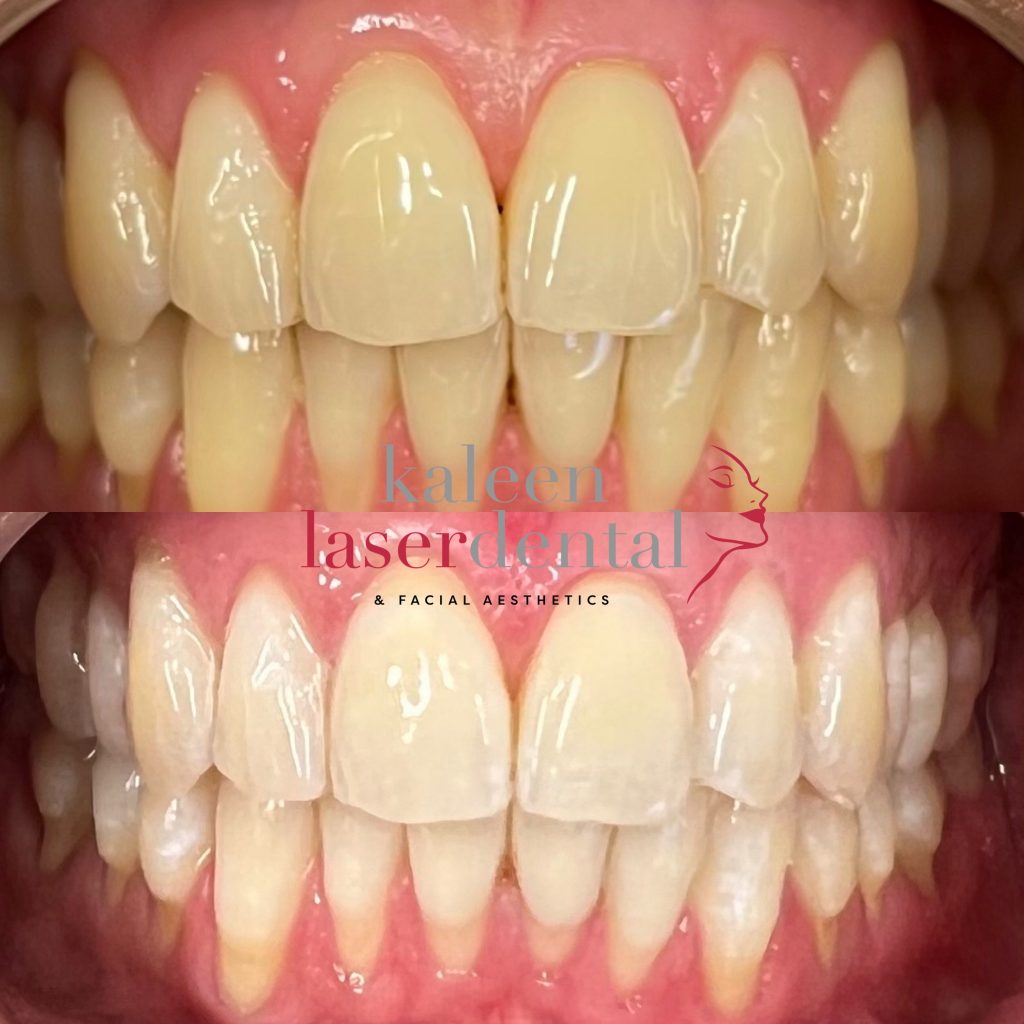
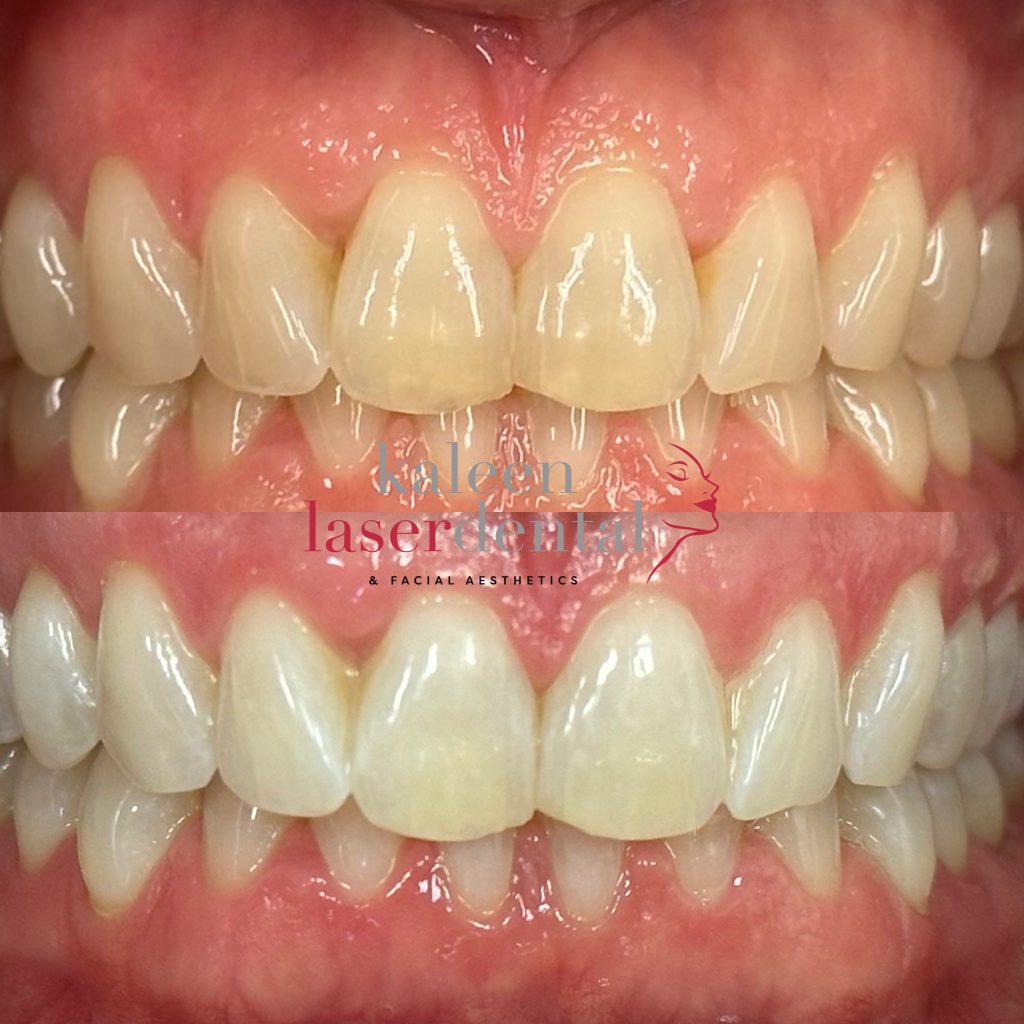
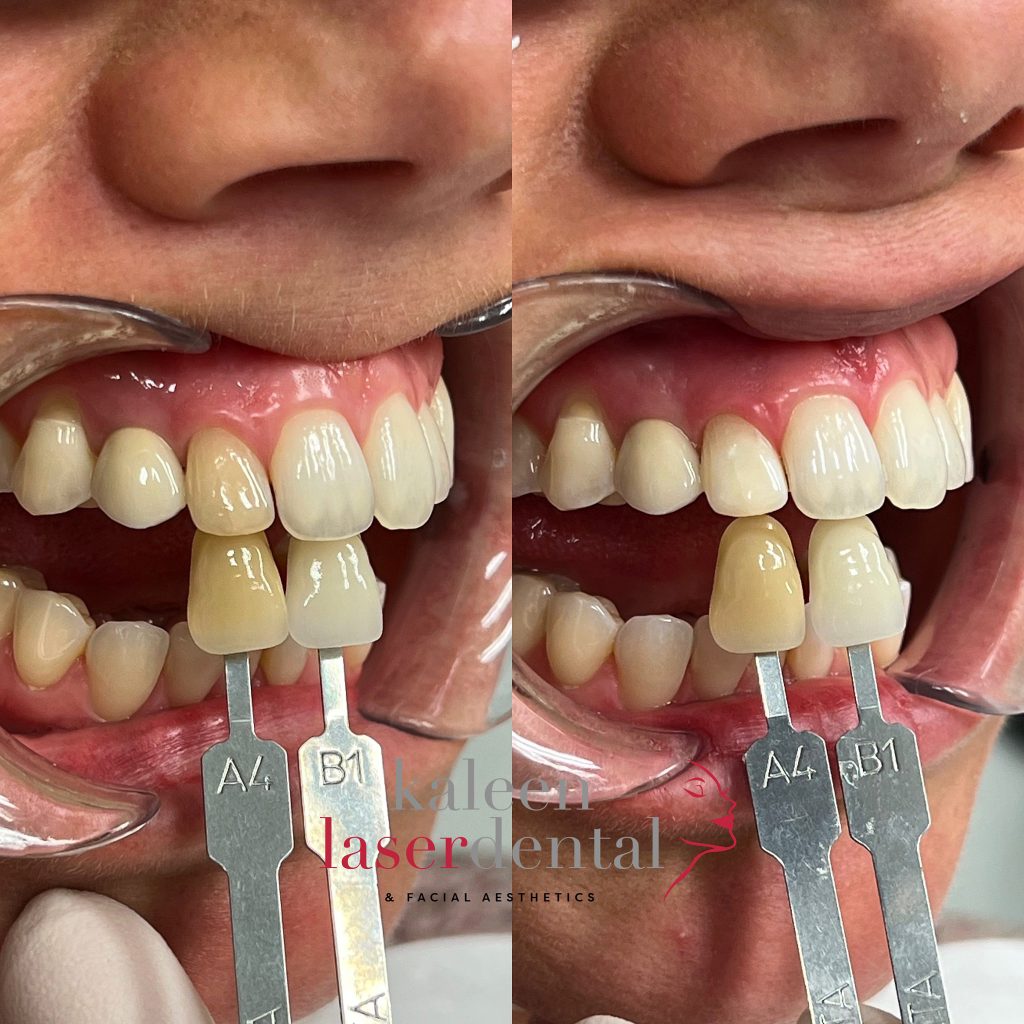
Teeth whitening before after treatment
Click to enlarge
Click to enlarge
Click to enlarge
Click to enlarge
Click to enlarge
Click to enlarge
Click to enlarge

Laser teeth whitening

Laser in-office teeth whitening is a procedure designed to lighten the colour of your teeth using a combination of hydrogen peroxide gel and laser light. The Laser Teeth Whitening Treatment (LTWT) uses laser energy to activate the bleaching gel. The active free radicals released from the gel break down stain molecules, producing maximum possible whitening results in the shortest possible time.

During the procedure, the whitening gel is applied to your teeth, which are then exposed to Er:YAG laser light for a total duration of 30–40 minutes. Throughout the treatment, the soft tissues of your mouth (lips, gums, and tongue) are protected to ensure they are not exposed to the gel or the laser light.

We use Fotona’s patented TouchWhite®, an in-chair method that has advantages over other light-activated techniques. The Er:YAG wavelength does not penetrate beyond the gel into enamel, dentine, or pulpal tissue, meaning treated teeth are safe from collateral heat damage.

Patients also report a noticeable increase in comfort during and after treatment compared with other techniques.

Who can have teeth whitening?

Almost all natural teeth can benefit from whitening, and significant results can often be achieved.

Patients who have unevenly coloured teeth, or who are about to receive new crowns or veneers, may consider teeth whitening before the final shade of restorations is chosen.

Teeth whitening does not lighten old artificial teeth, caps, crowns, veneers, porcelain, composite, or other restorative materials.

People with yellow or yellow-brown stains usually achieve better results than those with grey or bluish-grey discolouration. Teeth affected by multiple colourations, bands, splotches, or spots (such as from tetracycline use or fluorosis) do not whiten as effectively, may require multiple treatments, or may not whiten at all.

Is teeth whitening safe?

When the right whitening products and techniques are used in the controlled environment of a dental practice, teeth whitening is safe.

Before treatment, teeth should be checked for caries, gum disease, leaking fillings, or cracks to avoid complications such as severe dentine hypersensitivity or, in extreme cases, pulpal necrosis.

Risks and complications

Risks and complications associated with vital and non-vital teeth whitening include, but are not limited to:

  • Temporary tooth sensitivity to cold air and water
  • Temporary gum irritation, ranging from mild redness/whitish appearance to a short-lived ‘itchy’ sensation. In rare cases, gum ulceration may occur.
  • Rare cervical root resorption, reported in non-vital tooth bleaching
  • Relapse of discolouration, which may require repeated treatment

These risks vary from person to person, and a comprehensive discussion during your consultation is essential.

You deserve a brighter smile

Call us today – 02 6241 6718

Share This